Independent Axle Control (IAC) represents a significant advancement in power and technology for diesel-electric locomotives. To understand IAC’s benefits, let’s first look at how these powerful machines work.
The first Diesel locomotives designs had an engine and transmission similar to cars, however it quickly proved to be inadequate as gearboxes were unable to cope with the immense torque required to move heavy trains. Diesel locomotives didn’t achieve commercial success until 1914 when Hermann Lemp pioneered a new powertrain based on electricity. Instead of a gearbox, the diesel engine now drives a generator/alternator. which ran the electricity through rectifiers and to DC motors to drive the wheels.
This system proved effective for decades. However, advancements in electronics during the 1980s and 90s made alternating current (AC) motor technology a viable option. This was a marked improvement as AC motors offer advantages like higher efficiency and reliability. In order to make AC motors work, a new device called an Inverter was incorporated that converts the electricity from the alternator into a form suitable for powering the motors and to control speed. A key benefit of these inverters was the ability to independently control the speed of each axle – a feature known as Independent Axle Control (IAC). Many modern locomotives have shifted to AC motors as the superior option for locomotive power, however there remains a large number of locomotives that still use DC motors. A substantial number of organizations still rely on DC motors due to their availability and cost-effectiveness. Recognizing this, significant efforts have been made to improve the performance of DC locomotives. This has culminated in the innovation of Choppers, which use IAC to close the gap between DC locomotives and their AC counterparts.
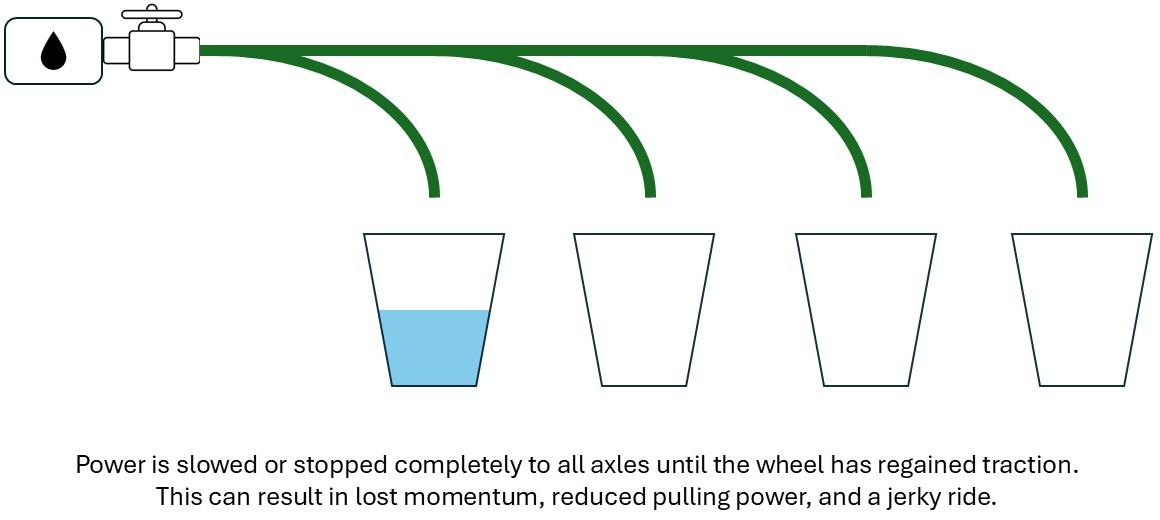
The primary benefit of IAC lies in its ability to significantly increase a locomotive’s pulling power, otherwise known as tractive effort. Tractive effort represents the ratio of the force a locomotive can exert on a train compared to its own weight. A major limiting factor is friction: Too much power and the wheels will simply spin on the rail instead of making progress. In traditional DC locomotives, when a slip was detected, the entire system had to reduce power until traction was restored. IAC introduces DC Choppers (or AC Inverters) as a regulator at each axle, allowing for more precise control.
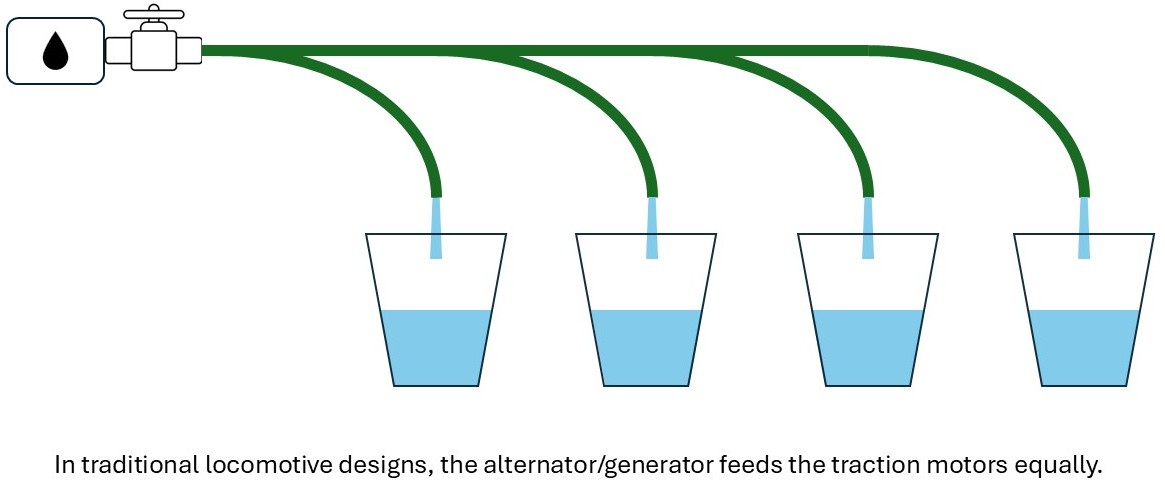
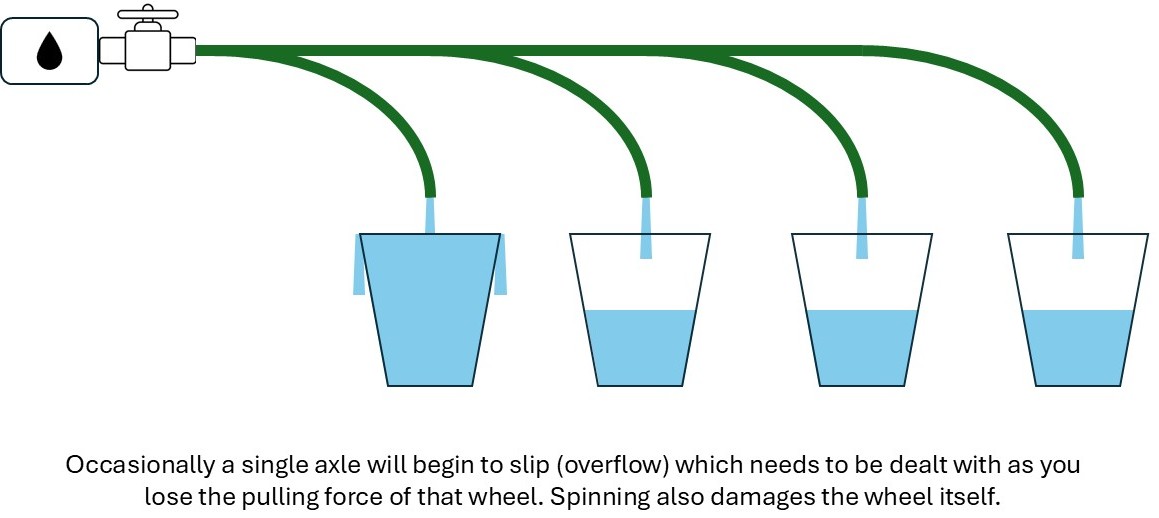
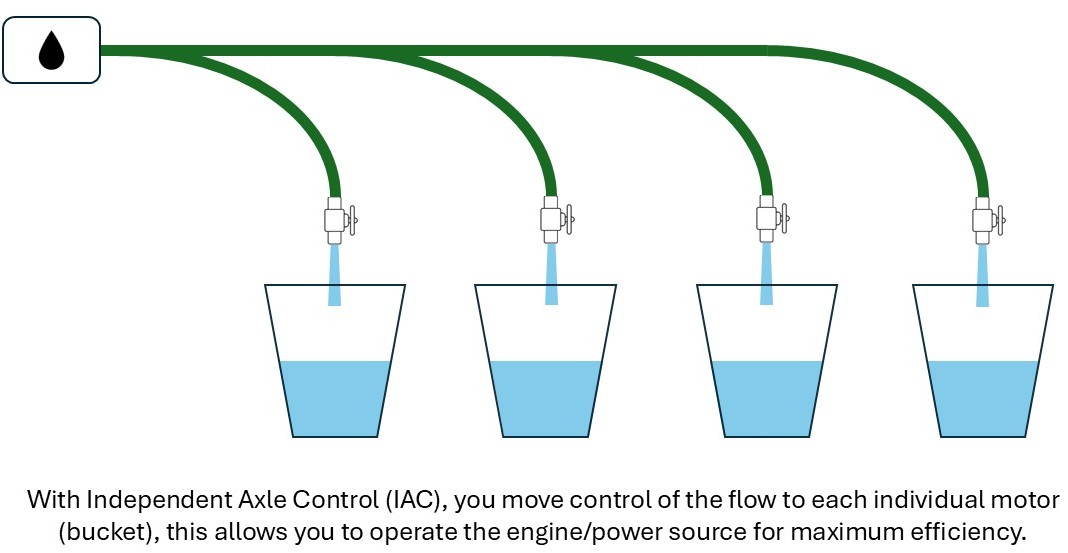
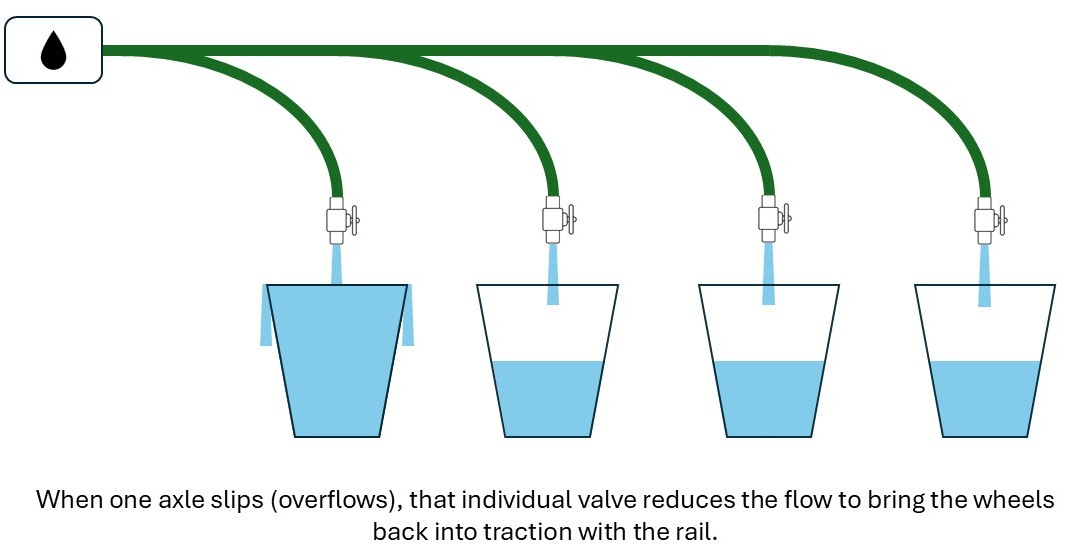
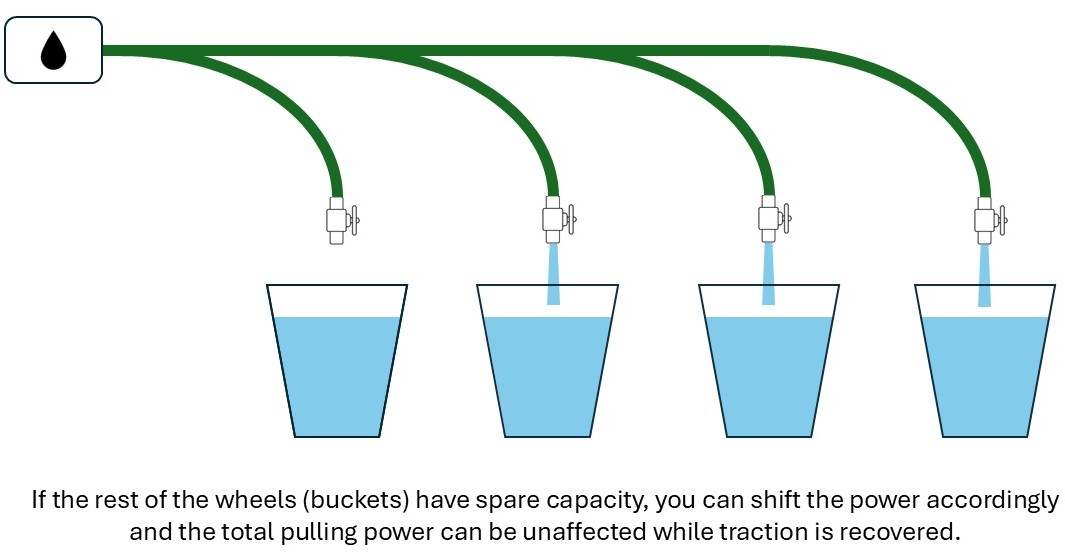
Think of it this way: Imagine the power is water, and each axle is a bucket slowly consuming that water. Older systems used a single valve for the whole system, and as soon as one bucket (axle) overflows (spins) you must shut off the valve until the issue is resolved, even if the rest are working well. With IAC, you add a valve at every bucket. This means that if a bucket is struggling, the flow can be limited there without impact on the whole system, and if one bucket is flowing better than the others (has more grip), it can receive more power.
Another way to think about IAC is to compare it to Anti-lock Braking System(ABS) brakes on your car. When braking, you want maximum stopping power. Older locomotives were like cars without ABS. Applying the brakes hard could easily lead to wheel lockup and skidding. At that point you have to let off the brake until you regain control. Modern ABS systems constantly monitor each tire, so now when you have a tire lock up, the system releases brake pressure on that individual wheel until it rotates again. In the same way that ABS can help you stop faster and potentially avoid an accident, IAC allows a locomotive to become a more useful.
IAC has resulted in a substantial increase in the tractive effort available for DC locomotives, often as much as 30% increase in what a single locomotive can pull. This improvement is particularly noticeable in poor weather conditions, when traction is limited and constantly changing. Furthermore, IAC reduces stress on the engine/alternator by minimizing the constant adjustments otherwise necessary for traction, allowing it to operate more consistently at its most efficient RPM. These choppers (and inverters) can react and adjust the power in fractions of a second, with very subtle adjustments to make sure the wheels are all pulling at their peak. These improvements often allow organizations to reduce the number of locomotives required for their operations.
Integral Control Systems is proud to supply the choppers and inverters required to update many common locomotive types with IAC technology. We serve customers worldwide, helping them breathe new life into aging equipment and maximize its performance. Contact us today to learn more about how we can help you modernize your fleet!