
Locomotives exist to move railcars. From the smallest railcar mover to the largest AC locomotives, their design is defined by one goal: moving the maximum amount of weight that technology and cost allow. The measure of this pulling force is tractive effort, usually expressed in lbf (pound-force).
But how much can a locomotive really pull? And more importantly, how can you maximize that potential?
The Four Pillars of Tractive Effort
Tractive effort is limited by four key factors:
Weight: The easiest variable to manage. Locomotives often add ballast to increase weight and grip. However, more weight means more power required just to move the engine itself.
Rail Conditions: A huge variable that demands constant adaptation. Rain, snow, ice, wet leaves, extreme temperatures, curves, and track quality can drastically reduce traction. While sand helps, it’s unpredictable. Designing for only “average” conditions is risky; you must account for the worst-case scenario.
Power: This encompasses both power generation (diesel, battery, pantograph) and what can be effectively put onto the track. Locomotives are typically designed with more power than they can safely deliver to the wheels without losing grip. Nothing here will change the amount of power generated by the engine, only increasing how efficiently it is converted into forward movement.
Powertrain Design: This is often the most impactful area for improvement. Upgrading a fleet’s control systems or traction technology can unlock substantially more power from existing locomotives, which is far less expensive than adding new rolling stock or increasing locomotive counts.
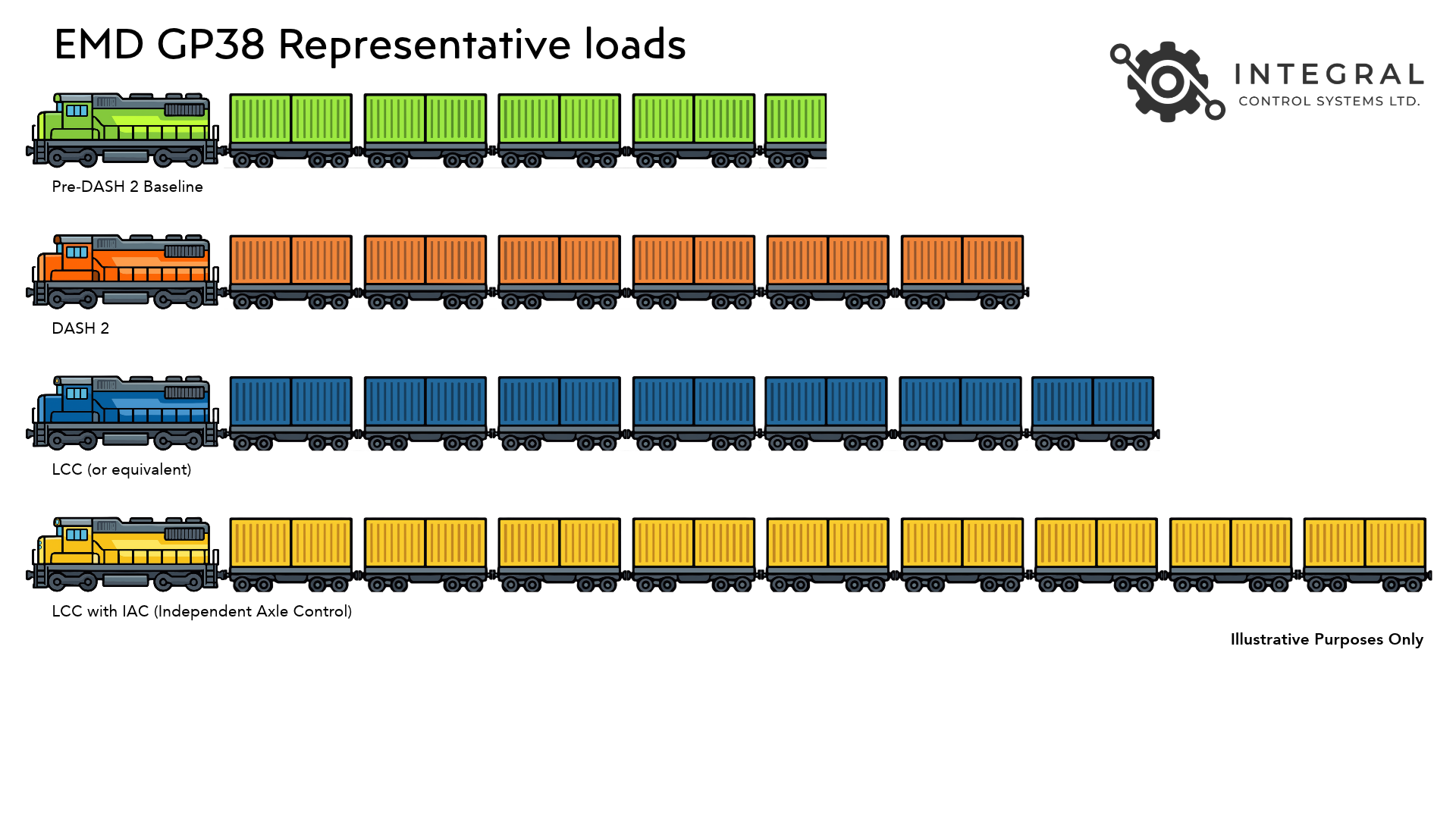
The Evolution of Pulling Force: From Relays to IAC
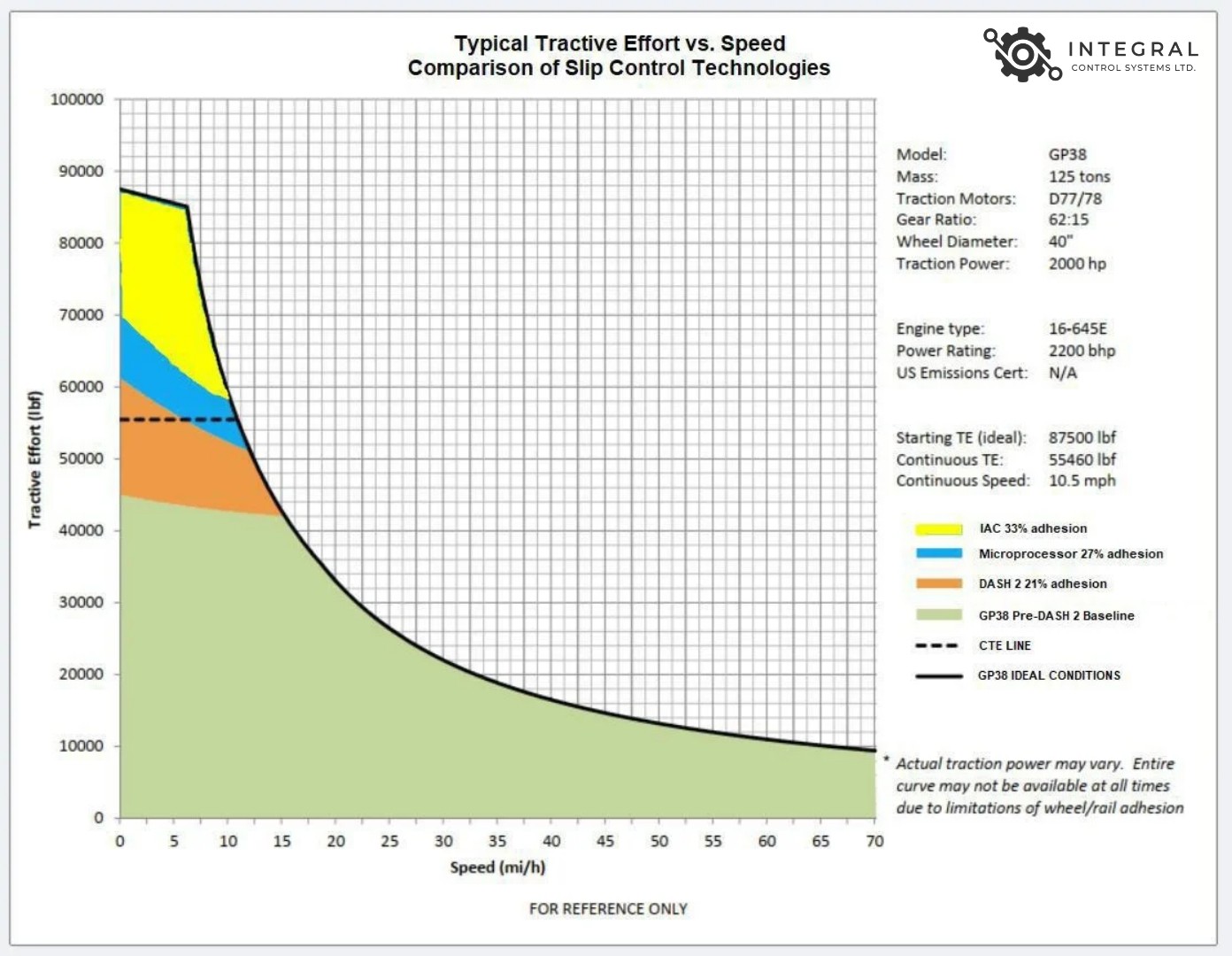
Technology has dramatically improved how locomotives deliver power to the rails. Consider this example of tractive effort chart from a GP38:
Relay-Based Systems (Green): Early systems couldn’t respond quickly to wheel slip, limiting reliable pulling force to around 45,000 lbf from a stop.
Dash-2 Electronics (Orange): Improved wheel slip detection allowed the locomotive to maintain power flow more accurately, increasing pull from a standstill to approximately 60,000 lbf.
Microprocessor Control (Blue): Modern systems like our LCC poll wheels and motors hundreds of times per second, detecting and correcting for slip in real time. This level of responsiveness brings pulling force close to 70,000 lbf.
IAC – Independent Axle Control (Yellow): By adding DC Choppers to your microprocessor system, you let each axle operate independently at the limit of its grip and the power bottleneck shifts to the motors themselves. Even as one wheel slips, others continue pulling at maximum capacity. This is especially critical in poor weather, where grip fluctuates constantly. You can learn more about IAC here.
What Does This Mean for Your Fleet?
As fleets age, many railroads consider purchasing new locomotives or full manufacturer rebuilds. But there’s a smarter, more cost-effective path: modernizing your control and traction systems.
By upgrading to a modern microprocessor-based control system or implementing IAC, you can unlock significantly more pulling force from your existing locomotives— surpassing the limits you previously thought possible. This approach extends asset life, boosts efficiency, and delivers better performance without the capital expense of new hardware.
 Note: Increases in pulling force is separate from braking capability. If your fleet is limited by its ability to slow down, these upgrades focus solely on traction.
Ready to Maximize Your Fleet’s Potential?
Modernizing your locomotive’s control and traction systems isn’t just about efficiency—it’s about performance, safety, and cost savings. Let us help you unlock the full potential of your fleet with advanced traction solutions tailored to your operational needs.
Contact us today to discuss how modern controls can transform your locomotive fleet.